Dr Adrian Hunt is an experienced ophthalmologist with 20+ years of experience. He is a Fellowship trained Medical Retina subspecialist and has also completed a PhD in retinal and macular disease, which is his clinical area of expertise.
Dr Hunt routinely manages the following conditions:
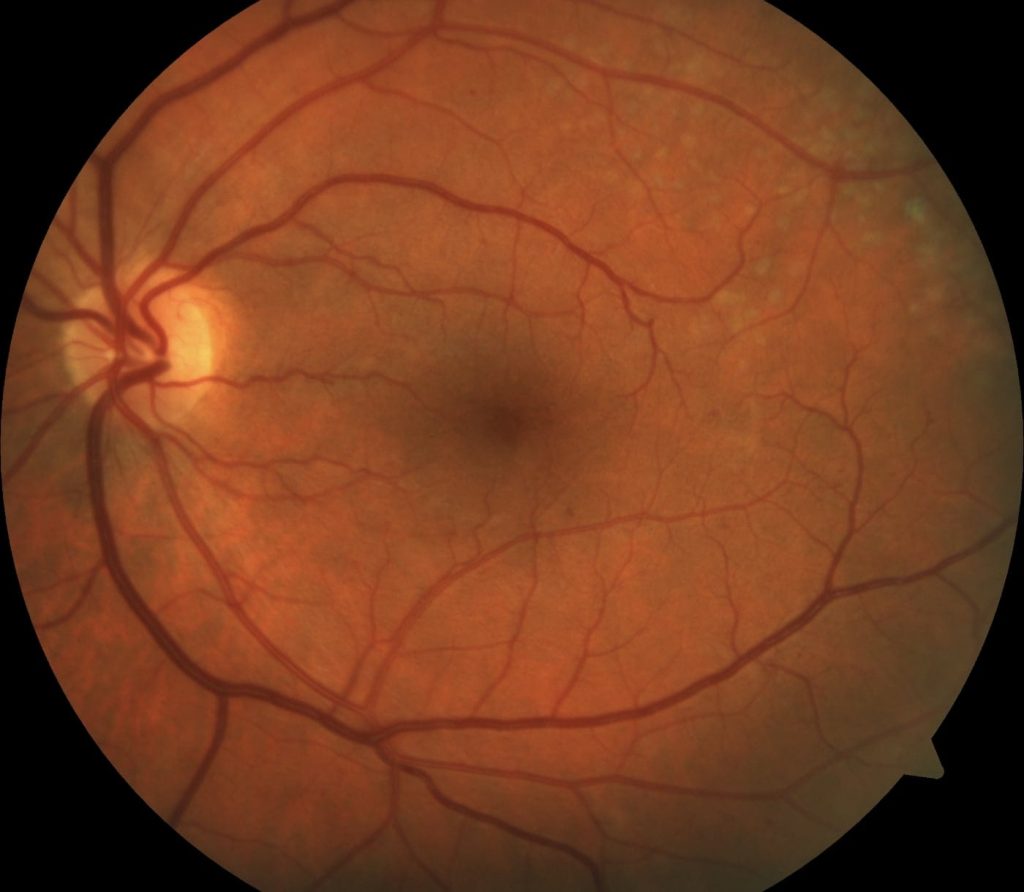
We offer a range of clinical service at our Miranda clinic to address retinal disorders, including:
General and retinal eye assessments using the latest diagnostic equipment by team of experienced orthoptist, ophthalmic assistant and Dr Hunt.
Intravitreal injections (eg: anti-VEGF) are commonly performed by Dr Adrian Hunt at his Miranda clinic to deliver medication directly into the vitreous cavity of the eye. This allows very high concentrations of medication to reach the retina and macula, where many sight-threatening diseases occur.
Below are the most common conditions treated with intravitreal injections at our clinic:
Laser photocoagulation is a well-established retinal treatment used by Dr Adrian Hunt to treat conditions where retinal blood vessels are leaking, abnormal vessels are forming, or the retina is at risk of detaching. The laser works by applying controlled thermal energy to specific areas of the retina, sealing leaking vessels, destroying abnormal vessels, or creating adhesions that stabilise the retina.
Below are the main conditions treated with retinal laser photocoagulation at our clinic:
Overview
Age-related macular degeneration (AMD) is a degenerative condition affecting the macula, the central portion of the retina responsible for detailed vision used for reading, driving and recognising faces. It most commonly affects people over the age of 60 and is a leading cause of vision loss in developed countries.
There are two forms of AMD. Dry AMD develops gradually as retinal cells deteriorate and deposits known as drusen accumulate beneath the macula. Wet AMD is less common but more serious and occurs when abnormal blood vessels grow beneath the retina and leak fluid or blood, causing rapid vision loss.
Symptoms
Treatment Options
Overview
Diabetic retinopathy is a complication of diabetes that damages the small blood vessels of the retina. High blood glucose levels cause these vessels to weaken, leak fluid or bleed. Over time abnormal new blood vessels may grow on the retinal surface. Diabetic macular oedema occurs when fluid accumulates in the macula, causing swelling and central vision impairment.
Symptoms
Treatment Options
Overview
Retinal vein occlusion occurs when a vein that drains blood from the retina becomes blocked. This blockage leads to retinal haemorrhage, fluid leakage and swelling of the retina. It may involve a smaller branch vein (BRVO) or the main retinal vein (CRVO). Macular oedema is the most common cause of vision loss associated with this condition.
Symptoms
Treatment Options
Overview
Central serous chorioretinopathy occurs when fluid accumulates beneath the retina, causing a localised detachment of the macula. It often affects adults aged 30–50 and is more common in men. Stress, corticosteroid medications and certain personality traits have been associated with increased risk.
Symptoms
Treatment Options
Overview
Retinal artery occlusion occurs when blood flow through the retinal artery becomes blocked, usually by an embolus from the carotid artery or heart. Because the retina relies on continuous blood supply, interruption can lead to rapid and severe vision loss. The condition is often considered a stroke affecting the eye.
Symptoms
Treatment Options
Overview
Glaucoma refers to a group of conditions that damage the optic nerve, often due to elevated pressure within the eye. Over time this damage can lead to progressive vision loss. The most common form is primary open-angle glaucoma, which typically develops slowly and without early symptoms.
Symptoms
Treatment Options
Point of Difference
Dr Hunt is an expert in the medical and surgical management of glaucoma. He provides minimally invasive glaucoma drainage devices as an additional procedure that can be combined with cataract surgery to reduce dependence on glaucoma drops.
Overview
A cataract occurs when the eye’s natural lens becomes cloudy, reducing the amount of light reaching the retina. Cataracts commonly develop with ageing but may also occur due to trauma, diabetes or certain medications. As the lens becomes more opaque, vision gradually worsens.
Symptoms
Treatment Options
Overview
A pterygium is a non-cancerous growth of tissue that develops on the white part of the eye (conjunctiva) and may extend onto the cornea. It is often triangular in shape and is commonly associated with prolonged exposure to ultraviolet (UV) light, wind, dust and dry environments. For this reason it is more frequently seen in people who spend significant time outdoors. In many cases the growth remains small and stable, but in some patients it can slowly enlarge and affect the cornea, potentially interfering with vision.
Symptoms
Treatment Options
Overview
Dry eye disease occurs when the eyes do not produce enough tears or when the tear film evaporates too quickly, resulting in inadequate lubrication of the ocular surface. The tear film is essential for maintaining clear vision and protecting the eye from irritation and infection. Dry eye is extremely common and can occur due to ageing, prolonged screen use, environmental conditions, contact lens wear, hormonal changes, or certain medications. In some patients it is associated with inflammatory conditions affecting the eyelids or tear glands. The condition may be temporary or chronic and can significantly affect comfort and visual quality if untreated.
Symptoms
Treatment Options
Overview
Posterior capsular opacification (PCO) is a common condition that can develop after cataract surgery. During cataract surgery the cloudy natural lens is removed and replaced with an artificial intraocular lens, which is positioned within the remaining lens capsule. Over time, residual lens cells can grow on the back portion of this capsule, causing it to become cloudy. This clouding can interfere with the passage of light to the retina, resulting in vision changes similar to those experienced with cataracts.
Symptoms
Treatment Options